Have any question?
Call (240) 226-7055

Call (240) 226-7055


It usually starts with good intentions. A workflow feels sluggish, a team member suggests an app to fix it, and somebody enters a corporate credit card. Fast-forward six months, and your business is paying for three different platforms that perform the exact same job. Your team juggles four different logins just to share a single PDF, and nobody knows which project board has the real deadline.
Most organizations use roughly a third of the built-in capabilities in their core productivity suites, such as Microsoft 365 or Google Workspace. The rest of the budget quietly drains away through forgotten recurring subscriptions, duplicate boards, and paid licenses assigned to employees who left the company eight months ago.

If 2025 was the year everyone panicked about artificial intelligence replacing entire workforces, 2026 was the year we all realized it is mostly just useful for drafting emails, automating data entry, and handling tedious admin work.
The biggest technology shifts this past year were not about flashy futuristic promises. They were about practical implementation and strict accountability.

Managing local server hardware is a massive expense. Buying a new server means paying for peak capacity you rarely use and dedicating physical office space to house a noisy machine. The shift to cloud infrastructure changes that dynamic, turning unpredictable capital expenses into predictable operating costs. It is no longer just an upgrade for early adopters. It is the baseline for operational efficiency.
The immediate financial and practical return on investment from the cloud is significant, and that value keeps compounding as the technology matures.

Cloud computing is simply renting space on powerful computers located in distant data centers. It gives your business incredible flexibility, but every single action your staff takes must travel back and forth across the public Internet.
Think of it like running a retail shop where every sales receipt must be mailed to a central office across the country before you can hand a customer their change. It works, but it creates unnecessary delays.
Managing a single cloud platform takes work. Trying to manage a mix of public, private, and hybrid cloud environments can quickly feel like herding cats in a thunderstorm—expensive cats that charge you by the gigabyte.
Most organizations end up with a multi-cloud strategy almost by accident. You started with a private cloud to keep sensitive data under lock and key, spun up a public cloud for scalable web apps, and tied them together into a hybrid setup because it seemed like the best of both worlds. In many ways, it is. However, without proper oversight, multi-cloud platforms degenerate into a chaotic web of runaway subscription costs, security blind spots, and wasted administrative hours.

When daily operations slow down and margins shrink, business owners usually look straight at payroll or marketing expenses. However, hidden software subscriptions and aging hardware are far more likely to be the silent productivity killers in your office.
Technology should remove friction from your workday, not create it. Cleaning up your technology stack is one of the fastest ways to eliminate operational bottlenecks, secure your data, and give your team hours back every single week.
When your team members are trying to hit tight deadlines, they want the path of least resistance. Often, that means saving critical files to their local desktop or a personal cloud account to avoid network latency or deep folder hierarchies.
It seems harmless on the surface. However, storing company information on local drives creates major operational risks for your business.

Moving your company files into cloud storage like Microsoft OneDrive or Google Drive is a huge milestone, but without basic folder rules, it quickly turns into digital chaos. Searching for misplaced files drains hours of staff productivity. Simple file rules fix that fast.

When a small business starts out, file sharing usually happens organically through email attachments, personal cloud drives, and quick chat links. While that gets work done in the beginning, scaling a business on unmanaged file habits creates serious operational snarls and major security vulnerabilities down the line.
The promise of cloud platforms, where the provider handles most of the work, is incredibly enticing. After all, why wouldn’t you want to move your data to the cloud, where you don’t have to worry about backups, security, or server crashes? This perspective also makes it sound like your business is off the hook, but this is not necessarily the case.
This is why you need to review the terms and conditions of your cloud provider’s services before you make any assumptions as to what’s covered and what’s not by your service level agreement. Today, we want to cover some of the misconceptions that frequently pop up with cloud services so you can make better decisions moving forward.

If you’re balancing office servers and cloud tools, it’s time to shift your focus. Managing IT isn't just about the physical hardware anymore; it’s about making sure your team can actually do their jobs. The goal is to maximize the value of the technology you’ve already bought while ensuring the system stays fast and reliable from anywhere. When you mix private servers with public cloud services, you’re building a bridge that needs to be easy for your employees to cross but impossible for hackers to break into.

Does your business still rely on the physical server closet? This space is essentially a physical anchor that requires dedicated cooling, constant hardware monitoring, and a team ready to handle any issues with the machines themselves, making it perhaps the most expensive real estate you own for your business. More agile businesses are forsaking the server closet in favor of a solution that doesn’t require a physical footprint: the cloud.
Some businesses find it preferable to host their servers on-site, but they fail to ask themselves if the server is a reliable asset or a financial drain. For years, the argument was in favor of on-premise hardware due to control and a one-time purchase price. But the landscape has shifted since, and now business owners are prioritizing Total Cost of Ownership over control. Do you really know how much your physical servers are costing you, and do you think they are worth that price point?
For years, business owners viewed cloud security as a technical necessity; a line item on the balance sheet tucked away under IT expenses, right next to printer ink and laptop repairs. But as we navigate the landscape of 2026, the narrative has fundamentally shifted.

Sometimes it feels like a lot to ask for small businesses to invest in new technology, even if that technology is beneficial to their mission. There’s a better way to access the right hardware for the job, though, and it stems from the cloud. By moving some of your hardware to the cloud, you can save money and frustrations during implementation and operation, all while enjoying greater security.

Is your business still tied up with its rapidly aging server hardware? This can stifle your company’s growth, whether you realize it or not. The good news is that the cloud offers ways for your business to transcend the limitations of traditional IT, and with a cloud-first IT model, you can work toward making the cloud your default and preferred choice for all your new IT initiatives.
Today, we’ll look at why the cloud-first model is the preferred choice for modern business owners, as well as how it can lead to more scalability, cost predictability, and remote work potential for your company’s employees.

It doesn’t matter how big or small your business is or which industry you fall into; communication is always going to be a major pain point that influences your technology investments. Thankfully, there’s a simple solution called Voice over Internet Protocol, or VoIP, that is a strategic and sound upgrade from your traditional telephone solution, and it’s one that can transform your communication infrastructure for the better.
Here are three reasons why you should consider a VoIP phone system today.

You want your business to operate efficiently; that’s hardly a controversial statement. When you waste time, money, and resources, your business’ growth can crawl to a halt and give your competitors an advantage over you. Technology helps you bridge this gap and can give you the power to compete at higher levels than you’ve ever thought possible. Let’s go over some of the solutions modern businesses use to drive results.

Cloud computing has altered how businesses operate forever and it’s because it brings unprecedented levels of flexibility and efficiency. One of its most compelling features is its scalability, the ability to easily handle a growing amount of work by adding or removing resources as needed.
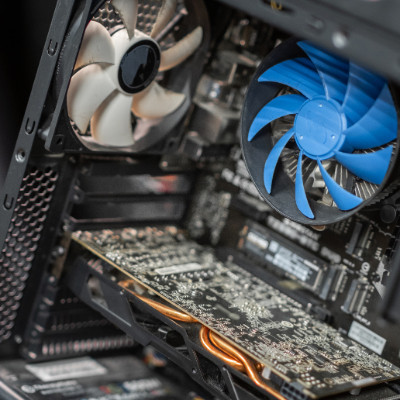
It's a fact that computers generate heat. From the laptop fan whirring away on your desk to the massive arrays of servers powering cloud computing and AI, these machines require cooling to function optimally. As our reliance on the cloud expands, however, the sheer scale of this cooling requirement is transforming into a significant environmental and financial burden.
Our network audit will reveal hidden problems, security vulnerabilities, and other issues lurking on your network.
Learn more about what C3-Solutions can do for your business.
C3-Solutions
300 Kerby Hill Rd
Fort Washington, Maryland 20744