Have any question?
Call (240) 226-7055

Call (240) 226-7055


Clicking "Restart Later" on a software update notice feels like a quick productivity win when you are in the middle of a workday. Stopping what you are doing to let a machine reboot for ten minutes seems inconvenient when you have work to complete.
The problem is that those ten-minute delays stack up fast. What starts as a minor delay usually ends up as an avoidable network outage, a security incident, or hours of wasted payroll.

Even well-managed organizations run into operational blind spots created by modern technology. Falling into simple IT traps puts your data, your employees, and your business continuity at risk. Fortunately, recognizing these subtle errors allows you to resolve them immediately without spending a fortune on new gadgets.

If you’ve talked to a software vendor in the past decade or so, you’ve probably heard a pretty consistent pitch for the cloud: your access will be seamless, you’ll have nothing to maintain, there’s no limit to what you can do! Unfortunately, this isn’t necessarily the case. If either your business or the cloud provider experiences an outage, for instance, all these benefits evaporate. Your business is, for all intents and purposes, closed until the problem is solved.
Enter the local database, a practical and efficient way to overcome this weakness.

When daily operations slow down and margins shrink, business owners usually look straight at payroll or marketing expenses. However, hidden software subscriptions and aging hardware are far more likely to be the silent productivity killers in your office.
Technology should remove friction from your workday, not create it. Cleaning up your technology stack is one of the fastest ways to eliminate operational bottlenecks, secure your data, and give your team hours back every single week.

Most small business owners assume their company is too small to attract active hackers. In reality, cybercrime relies on automated tools scanning for open vulnerabilities rather than specific brand names. Leaving your network unsecured guarantees your systems will eventually be discovered.

Cybersecurity Awareness Month serves as a vital reminder that technical infrastructure relies heavily on human habits. A single compromised credential can expose your entire network to unauthorized access and operational downtime. Protecting company data is a shared organizational responsibility.

Running a business keeps you busy, making it easy for tech blind spots to quietly sneak up on your operations.
The good news? Fixing the most common technology mistakes doesn't require a massive budget—just a few simple adjustments.

Many organizations continue running legacy software versions long past their official manufacturer support dates because the applications still execute basic daily tasks. That said, operating unpatched systems introduces severe security vulnerabilities that automated malware scans actively target.
Failing to modernize your business’ software leaves your corporate data exposed to unauthorized access and system-wide failure. Let’s talk about how to shore up these vulnerabilities.

Navigating a cyber insurance policy renewal used to involve answering a few straightforward questions about your basic antivirus software. Today, insurance underwriters require detailed evidence of comprehensive security controls before they will even consider approving your coverage.

October is Cybersecurity Awareness Month, a timely reminder that protecting your organization goes far beyond updating employee passwords or training your team to spot phishing emails. True cyber resilience requires inspecting every corner of your IT ecosystem—starting with the silent liabilities already running inside your network: legacy systems.
While these aging software programs, unsupported servers, and legacy hardware tools may still handle daily tasks reliably, operating them without aggressive security controls leaves your business wide open to modern cyberthreats.

Every single day, your employees log into dozens of apps just to get their work done. When security policies demand a brand-new complex password for every single account, password fatigue sets in fast. People start taking dangerous shortcuts, leaving your entire business exposed to modern cyberattacks.
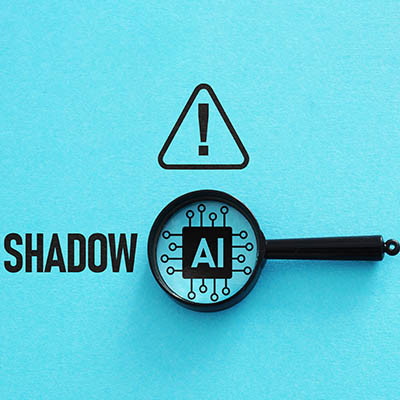
When your team is trying to get things done, they will usually take the path of least resistance. Sometimes, that means bringing outside tools into your daily workflow without asking permission first.

When a small business starts out, file sharing usually happens organically through email attachments, personal cloud drives, and quick chat links. While that gets work done in the beginning, scaling a business on unmanaged file habits creates serious operational snarls and major security vulnerabilities down the line.
Modern cybercriminals have modified their attack methodologies. Rather than immediately encrypting production servers, sophisticated network intruders quietly target secondary file archives first to prevent organizations from performing independent data restoration. If your enterprise data protection configuration permits the modification or erasure of backup logs, a security incident can result in the permanent destruction of your operational records and force costly operational downtime.

If you manage a business, you probably have a list of baseline security measures you check off regularly. You have firewalls, you use antivirus software, and you require your team to use strong passwords.
If those are the only lines of defense you rely on, however, you are missing the single most critical layer of data security available to your organization.
We need to talk about encryption. It is not just for global financial institutions or government agencies anymore. It is a fundamental operational requirement for every business.
Picture pouring a bucket of water down a standard kitchen funnel. If you pour slowly, a drop at a time, the water flows smoothly through the narrow spout, but if you tip the bucket all at once, the water backs up, pools at the top, and eventually spills over the edges. For years, the Virtual Private Network (VPN) served as the corporate equivalent of that narrow funnel spout. It was designed for an era when data volume was small and entirely centralized—meaning all of a company's valuable digital assets lived inside a single, physical office server room.
A remote worker turned on their VPN, established a single encrypted tunnel back to the office firewall, and gained broad access to the local network.
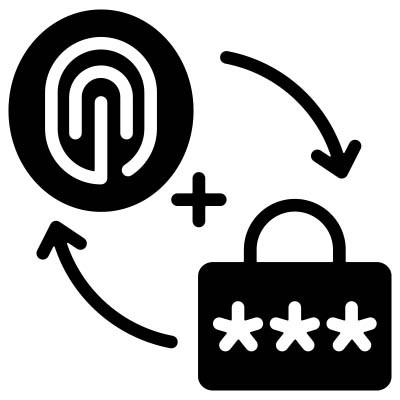
Password protection alone is no longer enough to keep your business data safe from modern cyber threats. Hackers use automated tools to guess weak credentials, and data breaches frequently expose corporate passwords online. If an unauthorized individual obtains login credentials for your company email or financial accounts, they can compromise your operations instantly.
Implementing multiple layers of verification is the most effective way to prevent unauthorized access and protect your assets.

There’s a misconception out there that younger workers, particularly Millennials and Gen Z, are more proficient with their technology compared to other generations. While they might have grown up using it, this experience doesn’t necessarily translate to proficiency. Assuming any one age group is more aware of cybersecurity is perhaps one of the most costly assumptions you can make.
The promise of cloud platforms, where the provider handles most of the work, is incredibly enticing. After all, why wouldn’t you want to move your data to the cloud, where you don’t have to worry about backups, security, or server crashes? This perspective also makes it sound like your business is off the hook, but this is not necessarily the case.
This is why you need to review the terms and conditions of your cloud provider’s services before you make any assumptions as to what’s covered and what’s not by your service level agreement. Today, we want to cover some of the misconceptions that frequently pop up with cloud services so you can make better decisions moving forward.

As a business owner, you probably manage hundreds of different digital assets, vendor relationships, and daily operational fires. Yet data security standards require you to navigate a complex matrix of cybersecurity rules just to let a customer swipe their card. If your business accepts Visa, Mastercard, American Express, or any other major credit card, you have likely run into a frustrating acronym: PCI DSS. It stands for Payment Card Industry Data Security Standard.
Let's look at this standard through the lens of a business owner and see why it actually matters.
Our network audit will reveal hidden problems, security vulnerabilities, and other issues lurking on your network.
Learn more about what C3-Solutions can do for your business.
C3-Solutions
300 Kerby Hill Rd
Fort Washington, Maryland 20744