Have any question?
Call (240) 226-7055

Call (240) 226-7055

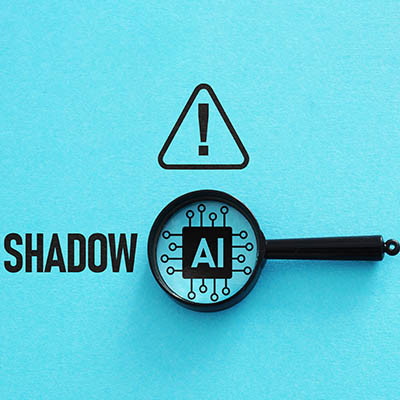
When your team is trying to get things done, they will usually take the path of least resistance. Sometimes, that means bringing outside tools into your daily workflow without asking permission first.

The internet is currently experiencing a massive deluge of AI-generated content. Companies everywhere are using automated tools to produce articles, social media posts, and guides at a rapid pace, publishing them without a single second of human editing.

Many business owners try to use AI image generators to create header graphics for newsletters or images for their websites, only to end up with blurry, unnatural results. The issue usually is not the software. The issue is that generic prompts yield generic outputs because these systems require explicit, granular instructions to produce high-quality results.
If you want to stop generating generic graphics and start producing clean, professional visuals, you need to provide the system with specific parameters. Here are 5 practical tips to get these tools to output exactly what you need.
With the efficiency that AI has unlocked for businesses, there’s been a trend amongst business leadership to implement it at every opportunity. This is a mistake, as it tends to accelerate low-value processes and procedures and give them the appearance of legitimate operational progress.
Empowering a wasteful process doesn’t help make it more worthwhile. It multiplies the waste it generates and hides its inefficiencies. Let’s talk about these detriments, starting with how to cut through the noise.

The pressure to implement artificial intelligence can often lead to unnecessary financial investments in specialized platforms before a clear operational need is identified. Business growth relies on utilizing technology to improve efficiency rather than simply purchasing new software.
The primary objective of artificial intelligence in a business environment is staff augmentation rather than human replacement. When technology is used solely for strict monitoring or headcount reduction, employee performance and engagement decline.

Artificial Intelligence is often framed as a productivity solution, but it has introduced a significant security risk known as shadow IT—specifically, shadow AI. This occurs when employees use unauthorized, public AI tools to summarize meeting notes, write code, or analyze spreadsheets without oversight from the IT department.
While the intent is usually to improve efficiency, employees often unknowingly upload proprietary company information to public databases.

We have all seen the headlines about what AI can do. It can write emails, analyze spreadsheets, and generate images in seconds. We rarely talk about the physical requirements for that to happen. When you ask a chatbot a question, you are triggering a massive chain reaction of resource consumption.

For a long time, one of the best practices for phishing prevention has been to pick up the phone and call up the person apparently sending a message. Unfortunately, in some cases, phone calls are now being exploited.
Now, AI enables scammers to mimic the voices of the people they impersonate through voice cloning. As a result, it is more important than ever to verify who you are talking to before sharing any sensitive information.

It feels good to be right. It feels even better to have an assistant that never argues, never pushes back, and seems to be on your exact wavelength 24/7. We have a name for a system that never disagrees with you: a broken one.
The reality is that AI lacks a moral compass or a personal creed. It doesn't have a "gut feeling" telling it when you’re about to make a massive business mistake. It operates purely on a map of mathematical probabilities, designed to reflect your own intent back to you with perfect clarity.

Imagine one of your employees receives a phone call from someone who sounds just like you. Would they be able to distinguish this deepfake from the genuine article? If you cannot answer this question with an emphatic “yes,” you have some work to do in preparing your team for modern cybersecurity standards.

I’m about to say something that is going to sound weird at first, but stay with me here:
I miss the Nigerian Prince scam.
I know, I know, it’s crazy, but let me tell you why: threats were a lot easier to spot.

By now, you’ve likely seen the headlines: AI is no longer a futuristic concept reserved for Silicon Valley giants. From automating customer service to predicting inventory needs, artificial intelligence is becoming the secret sauce for competitive small businesses. There is a catch, however. You can’t simply plug in AI and expect magic to happen. To help you prepare, we’ve put together a comprehensive roadmap to ensure your business is AI-ready.
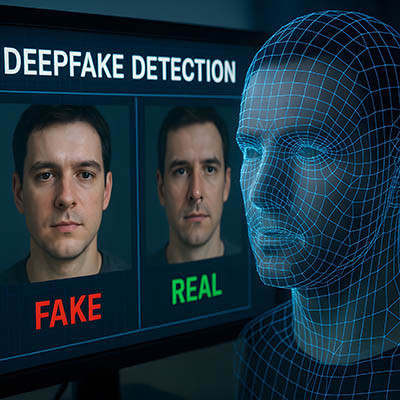
Imagine seeing a video of a world leader announcing a major policy change, or a clip of yourself saying something you never uttered. In the digital age, seeing is no longer believing. This is the reality of deepfakes, a rapidly evolving technology that uses artificial intelligence (AI) to create hyper-realistic but entirely fabricated media. While the technology itself is a marvel of engineering, its potential for misuse is alarming, turning "fake news" into a visceral, high-fidelity experience. Let’s take a look at deepfakes and what is being done to stop them.

We used to say change is constant. Now, change is a sprint. We are witnessing a massive shift in how fast the world moves, and it’s not just your imagination—human progress has hit the gas pedal.
Technologies aren't just appearing; they are crashing into each other and maturing so quickly that the "next big thing" is often replaced before it’s even fully installed. This isn't a random spike; it’s the result of three massive forces hitting their stride at once.

It’s smart to be skeptical these days. Between the constant buzz about AI and gadgets that promise the world but deliver very little, you don’t want to waste time chasing every shiny new object. Your goal is simple: run a business that is stable, profitable, and efficient.
The good news is that you don't need a computer science degree or a massive budget to make modern technology work for you.

It pays to be skeptical in today’s world of AI slop and bogus gadgets. After all, you don’t want to chase after every shiny new thing; you want to build an operation that’s both resilient and profitable. Technology offers countless opportunities to make this happen, and you don’t have to rely on fads or drain your budget to scale.

Nowadays, the era of "checkbox” compliance is officially dead. As regulatory bodies become more tech-savvy—using AI to scan documentation and detect inconsistencies at scale—businesses can no longer rely on manual spreadsheets and periodic audits to stay above water.
Technology has shifted from being a support tool to becoming the strategic infrastructure that keeps a business legal, ethical, and operational. Here is how technology is redefining compliance.

The era of suggested AI transparency has officially ended. Nowadays, opening the hood of your digital operations isn't just a best practice—it is the law. The age of the black box is being dismantled by global regulators who are now forcing companies’ AI to show its work.

AI has moved past the buzzword phase and into the plumbing phase. It is no longer about what an AI can say; it is about what it can do. But as the industry races toward total autonomy, the gap between a productivity breakthrough and a systemic breakdown has become a razor-thin edge.

For most businesses, integrating artificial intelligence isn't just about picking the right software; it’s about doing what you can to properly feed the beast. AI runs on data, and if that data is a chaotic mess, your expensive tools will be trying to solve a puzzle with half the pieces missing and the other half upside down.
Our network audit will reveal hidden problems, security vulnerabilities, and other issues lurking on your network.
Learn more about what C3-Solutions can do for your business.
C3-Solutions
300 Kerby Hill Rd
Fort Washington, Maryland 20744